The Women’s Elite Code
The behaviours that take the greatest sports women in the world to the top of their sport will take you to the top.
This is a keynote, workshop and leadership programme that turns forty years inside elite women's sport into the specific, learnable behaviours that make women in business perform under pressure, lead with confidence, and recover from setbacks faster than they thought possible.
Built for women's networks, leadership programmes and International Women's Day events.
The Women’s Elite Code is for you if you have ambitions to be the best you can, but know something is holding you back.
You may be excellent at your work, but find yourself shrinking in rooms where you should be the loudest voice.
You can deliver, but the cost of delivering is higher for you than it appears to be for the men around you.
You have been told you are talented, capable, even exceptional, and yet there is a gap between what you know you could be and what is actually showing up at work each morning.
When the pressure rises, your clarity falls.
When you fail, the recovery takes longer than you would like to admit.
When opportunities arrive, something inside you hesitates before saying yes.
WHY? WHY DO WE DO THIS?
None of this is a flaw in you. It is the absence of a learned set of behaviours that elite sportswomen have been training in for years.
The Women's Elite Code is the bridge between the woman you are now and the woman you already know you could become.
WHY IS SPORT RELEVANT HERE?
The sports field is the most reliable laboratory we have ever invented for building women who can perform under pressure. On a court, on a pitch, on a track, girls learn to lose publicly and turn up again the next day. They learn to be watched, judged and underestimated, and to keep playing anyway. They learn to ask for the ball. They learn that pressure is survivable, that failure is information, and that the body and the mind can both be trained.
Those lessons do not stay on the pitch. They walk into negotiations, interviews, boardrooms and difficult conversations decades later.
The women who make it to the very top of sport learn the most extreme version of those lessons.
“Ernst & Young ran a global study and found that 94 per cent
of women in C-suite roles played
competitive sport growing up. Ninety-four per cent!
”
The Women's Elite Code is what they learned, distilled into something every woman can use, whether or not she has ever picked up a hockey stick.
300+ elite athlete interviews underpin the framework
40 years inside elite sport at the very highest level
25 specific, repeatable behaviours drawn from Olympic champions
What changes for you?
By the time you have absorbed the Women's Elite Code, the difference will not be in what you know. It will be in how you behave when it matters. You will perform under pressure with the certainty of an Olympic champion, because you will have learned the same techniques the champions use. You will recover from setbacks faster and more completely, because you will understand exactly what failure is and exactly what it isn't. You will lead with a confidence that does not depend on who is in the room, because your standards will live inside you rather than in the eyes of others. You will hold yourself to a benchmark that quietly elevates everyone around you. You will step forward into difficult moments rather than away from them. And you will build your career with the deliberate, structured ambition of a world champion, because you will finally have the framework to do it.
The Five Pillars of the Women's Elite Code.
Forty years of interviews, three hundred Olympic champions, and one consistent pattern. Across every sport, every era and every culture, the same five pillars kept appearing. Each one breaks down into five specific behaviours, giving twenty-five learnable habits in total. Here is how each pillar works, and some of the women who taught me about it.
01 The Inner Drive
The greatest sportswomen I interviewed were not driven by the approval of others. They were driven by standards of their own, standards so high that the people around them often considered them extreme. Dame Kelly Holmes told me that the difference between good and great was what you did when it hurt. Chrissie Wellington described excellence as a choice she made every day. Their drive did not come from praise, from comparison, or from the noise outside. It came from somewhere deeper, an internal benchmark they refused to lower no matter who was watching, or, more importantly, when nobody was watching at all. That is the first behaviour you will learn to build. An inner standard that is yours, and that the world cannot move.
02 Mastering Pressure
Elite women in sport had to learn to perform while being watched, judged and underestimated, all at once. Denise Lewis got injured weeks before the Sydney Olympics and could not train physically, so she spent the run-up visualising every event in obsessive detail. She won gold. Jessica Ennis-Hill told me her confidence did not come from feeling brave on the day. It came from knowing she had done the work. Pressure does not break elite sportswomen because they have rehearsed it, decoded it, and built routines that carry them through it. You will leave knowing exactly how to think clearly when the stakes are real, and the room is not always on your side.
03 The Unseen Work
What looks like overnight success in elite sport is almost always years of invisible, relentless preparation. The England women's hockey team that won Olympic gold in Rio had spent two years preparing obsessively for a penalty shootout they prayed would never arrive, and then won the gold medal on penalties when it did. Katie Ledecky told me she did not think about winning; she thought about what she needed to do in training that day. The unseen work is the part nobody photographs, nobody applauds, and nobody puts on social media. It is also, without exception, the part that decides who wins. You will leave knowing how to build the disciplines that make exceptional performance feel inevitable rather than accidental.
04 The Edge Others Avoid
Almost every woman I interviewed at the top of her sport described the same thing. Stepping forward, deliberately, towards the moments when other people backed away. The difficult conversation. The high-pressure decision. The room that was not built for her. Billie Jean King called pressure a privilege. Serena Williams said luck had nothing to do with it. The women who reached the top did not enjoy those moments any more than the rest of us, but they had trained themselves to walk towards them while their instincts were screaming at them to walk away. That habit, repeated thousands of times, is what eventually makes the difference between a career that hovers and a career that rises. You will leave knowing how to step forward when everything in you wants to step back.
05 The Performance Ecosystem
The greatest female athletes did not perform alone. They built an environment around themselves that made excellence the norm rather than the exception. Denise Lewis spoke for an hour about her coach Charles van Commenee, the man who refused to soften feedback, and about the mother who quietly held the whole ecosystem together at home. Kelly Holmes had a team of people behind every medal. The lesson is simple, and it is not soft. Culture, standards, accountability and trust are not abstract concepts; they are performance variables, every bit as measurable as time on the track. You will leave knowing how to build that environment for yourself and how to build it for the women coming up behind you.
This is not a diversity session.
The Women's Elite Code is a high-performance programme, built around the most compelling evidence available, namely what the greatest female athletes on earth actually did to reach the top, and what every woman in a demanding professional environment can do with that knowledge. It is honest, practical, occasionally funny, and rooted entirely in real stories of real women who got to the very top of their fields. It works powerfully for women's networks, leadership development programmes, International Women's Day events, and any organisation that wants the women inside it to perform at their full potential.
Available as
Keynote, 60 to 90 minutes. Ideal for conferences and large events.
Half-day workshop. Practical and interactive, designed for leadership groups.
Full-day session. The deep-dive programme, with real behavioural change as the goal.
International Women's Day programme. Bespoke sessions for women's networks and IWD events.
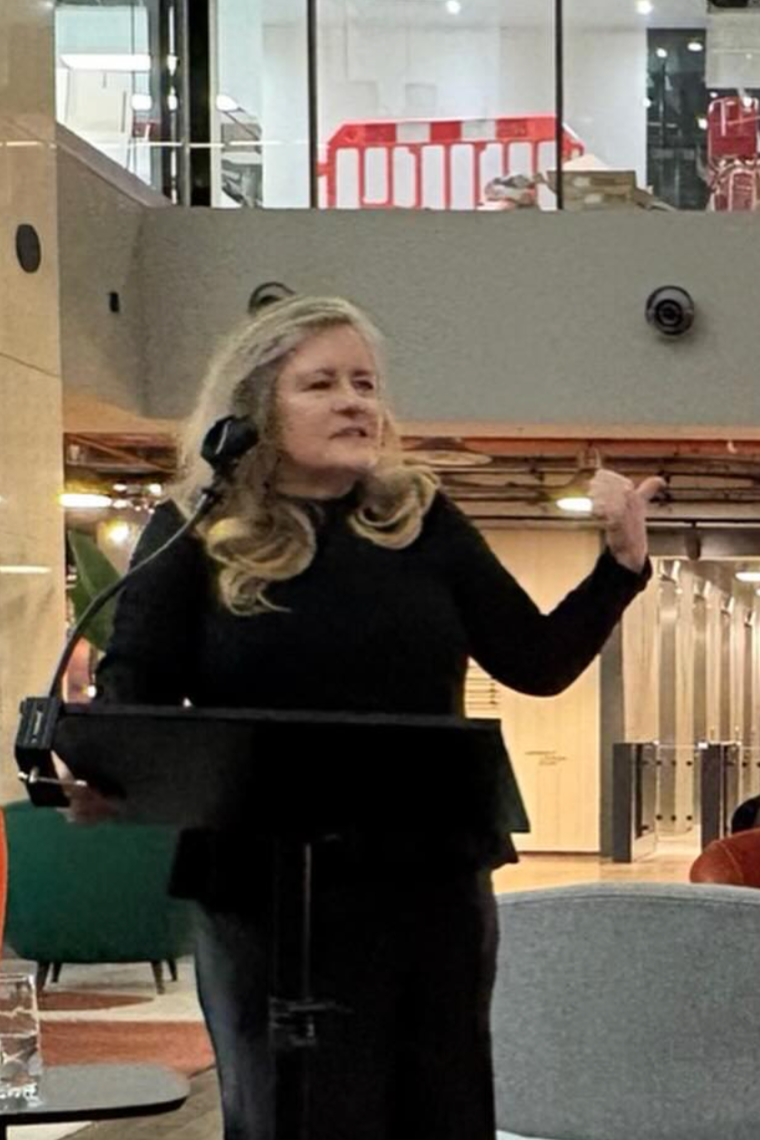
Every session is delivered personally by Alison Kervin OBE.
What people say.
"She has done as much for battling females as any woman since Boadicea."
The Spectator
"Sports and journalism are very difficult areas for women. To champion both is amazing. Bravo."
Baroness Brady
"Her work has helped break the gender barrier for women on the field of play and in administration."
Lord Sebastian Coe
"Alison Kervin's keynote brought something so thoughtful and enabling to the day, not just celebrating what women have achieved, but genuinely giving women the tools and the permission to go and take what they want."
Clare Mroz, Senior Events Executive, Patch
The field was always rehearsal for the boardroom.
Bring the Women's Elite Code to your organisation.
If you are planning a keynote, an International Women's Day event, a women's network programme or a leadership development day, I would love to talk to you about it. Every session is built around your audience, your industry and the specific outcomes you want them to leave with. The first conversation is always free, and there is no obligation.
Email Alison directly: ak@alisonkervin.co.uk
Telephone: 07880 505607